
• Welcome to the BMW R18 Forums. Member registration disables ads and allows you to post and share. Register Here.

Oil temperature gauge

  • <i class="fa--xf fal fa-check "><svg xmlns="http://www.w3.org/2000/svg" role="img" aria-hidden="true" ><use href="/data/local/icons/light.svg?v=1768230793#check"></use></svg></i> Discussion starter Discussion starter 4Zweistein
  • Start date Start date

4Zweistein

Member
Joined
Oct 10, 2021
Messages
59
Location
Cape Coral,FL USA
Visit site
Bike
2021 R18 Classic
I am planning on installing a oil temperature gauge on my R18 C. When I do my upcoming oil change I will install a M16x1.5 adapter plug with a 1/8 NPR sensor instead of the OEM drain plug. the wiring is pretty straight forward. I will tap into switched power at the plug under the left battery cover. I also will install a power block first at the plug. I ride mostly in FL and it can be very hot and I just want peace of mind. I will post updates about it once I have it hooked up

 
I am interested as well ... but it does bug the tar out of me that our bikes do have an oil temperature sensor ... must have, values are displayed on real time telemetry ... but they forgot (or omitted) to make it displayable on the LED display in my speedo ...
 
I am interested as well ... but it does bug the tar out of me that our bikes do have an oil temperature sensor ... must have, values are displayed on real time telemetry ... but they forgot (or omitted) to make it displayable on the LED display in my speedo ...
In my owners manual is actually a picture and instructions on how to display the oiltemp in the the cluster. But I tried and the value cannot be displayed on mine.
 
In my owners manual is actually a picture and instructions on how to display the oiltemp in the the cluster. But I tried and the value cannot be displayed on mine.
What model R18 do you have? I have heard (not confirmed) that people have managed to display it on the 'B' and/or 'TC' I have a FE pure and I can't find the setting either. I have been up and down the menu and found plenty of things to display or turn off ...but no oil pressure or temperature ... actually a shame IMO
 
Much more critical to air cooled engines than oil temps are cylinder head temps. Oil temps will remain much lower than CHT. I am speaking as an A&E mechanic flying and maintaining/restoring classics. Oils today are synthetic and designed to operate at maximum temps to evaporate contaminants and moisture all day. The danger to oil and your engine is idling and not running to max operating temps...starting for a short time without putting riding conditions for 5 to 7 miles is not good. I forget where, but have seen BMW boxer engine/oil temp tests in the past and will try to find them.
 
Last edited:
I am planning on installing a oil temperature gauge on my R18 C. When I do my upcoming oil change I will install a M16x1.5 adapter plug with a 1/8 NPR sensor instead of the OEM drain plug. the wiring is pretty straight forward. I will tap into switched power at the plug under the left battery cover. I also will install a power block first at the plug. I ride mostly in FL and it can be very hot and I just want peace of mind. I will post updates about it once I have it hooked up

1719021999472.png
NEVER GIVE UP!!!!!!!!
 
While these are all important temperatures (now this is strictly my opinion) .. I think this is TMI ... while riding I would be interested off and on to see how hot my oil is. Triple digits are not uncommon (@ 38ºC) 'round here and I know the ECU will give me warning if a sensor finds something 'off' ... but even modern oil has a temperature limit where viscosity break down occurs and then things get ugly real fast if I push her ... just my 2¢ ;)
This said ... I do have an infrared thermometer and I do check the exhaust headers sometime after a ride to see if they are equal in temperature :)
 
Curiosity got me Ulrich. What kind of temps are you noting at the exhaust headers when you shut off the bike? The reason I ask is my R18 does not tick tick tick like the other bike I have of similar displacement (1868cc).
 
While these are all important temperatures (now this is strictly my opinion) .. I think this is TMI ... while riding I would be interested off and on to see how hot my oil is. Triple digits are not uncommon (@ 38ºC) 'round here and I know the ECU will give me warning if a sensor finds something 'off' ... but even modern oil has a temperature limit where viscosity break down occurs and then things get ugly real fast if I push her ... just my 2¢ ;)
This said ... I do have an infrared thermometer and I do check the exhaust headers sometime after a ride to see if they are equal in temperature :)
Your oil temps MUST reach a minimum 212 F degrees, preferably 214 in order to burn off moisture and some contaminates. My R18 oil temp reaches and maintains 208-210 easily (that is not good enough) and I have to really push it hard to 215 degrees, especially during colder weather...many times it will not reach the higher temps...that is when more frequent oil changes are necessary for positive engine lifespan. That is using the infrared reader immediately off the road at shutdown. My measurements at the joint between the block and finned cylinder head typically measures around 220-230 degrees. To get a true meaning of cylinder head temp the measurement must be at the root of the spark plug. That is why a good after market cylinder head temp instrument must provide the sensor at the spark plug gasket position.

EDIT: In an aircraft you can adjust for proper cylinder head temps via the mixture adjustment on the panel.....of course not available in a motorcycle.
 
Last edited:
Continuing post #13 above, regarding "cylinder head temp instrument must provide the sensor at the spark plug gasket position"....This concerns me in high quality bikes like BMW "if the sensor is aftermarket". The depth of the spark plug tip has an effect on the ignition of the cylinder with all other considerations. The factory position of the depth of the seated plug using the factory crush washer "may?" be compromised by using the thickness of the cylinder head sensor when used as a replacement or in-addition-to the factory crush washer. I have always wondered if or if not there was a compromise. I wish someone with the knowledge of such a consideration could chime in with their thoughts?
 
Curiosity got me Ulrich. What kind of temps are you noting at the exhaust headers when you shut off the bike? The reason I ask is my R18 does not tick tick tick like the other bike I have of similar displacement (1868cc).
Sorry I don't remember ... I just check if both sides are close to the same :)

Your oil temps MUST reach a minimum 212 F degrees, preferably 214 in order to burn off moisture and some contaminates. My R18 oil temp reaches and maintains 208-210 easily (that is not good enough) and I have to really push it hard to 215 degrees, especially during colder weather...many times it will not reach the higher temps...that is when more frequent oil changes are necessary for positive engine lifespan. That is using the infrared reader immediately off the road at shutdown. My measurements at the joint between the block and finned cylinder head typically measures around 220-230 degrees. To get a true meaning of cylinder head temp the measurement must be at the root of the spark plug. That is why a good after market cylinder head temp instrument must provide the sensor at the spark plug gasket position.

EDIT: In an aircraft you can adjust for proper cylinder head temps via the mixture adjustment on the panel.....of course not available in a motorcycle.
I see you are thinking this out a whole lot further than I do ;)
 
Your oil temps MUST reach a minimum 212 F degrees, preferably 214 in order to burn off moisture and some contaminates. My R18 oil temp reaches and maintains 208-210 easily (that is not good enough) and I have to really push it hard to 215 degrees, especially during colder weather...many times it will not reach the higher temps...that is when more frequent oil changes are necessary for positive engine lifespan. That is using the infrared reader immediately off the road at shutdown. My measurements at the joint between the block and finned cylinder head typically measures around 220-230 degrees. To get a true meaning of cylinder head temp the measurement must be at the root of the spark plug. That is why a good after market cylinder head temp instrument must provide the sensor at the spark plug gasket position.

EDIT: In an aircraft you can adjust for proper cylinder head temps via the mixture adjustment on the panel.....of course not available in a motorcycle.
You do not need to achieve oil temperatures of 212F in order to clear moisture from the oil. Yes, 212F is the boiling point of water, but water evaporates just fine even at much lower temperatures than that. Evidence for this abounds - obviously sweat evaporates on your skin (temperature around 90F), you can see steam rising from a hot coffee cup (160F), and so forth.

Yes, the hotter the oil is, the faster water will evaporate, but there is nothing magic about 212F for a small amount of water mixed with oil. 180 - 190F is fine, it will just take a few minutes longer to achieve the same result, and the difference between 208F and 212F is irrelevant.

Engines with a PCV system, that produce a vacuum in the crankcase, increase the evaporation rate even more.
 
Last edited:
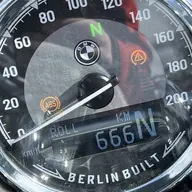
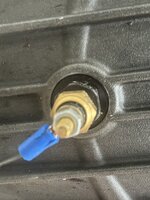
I finally got around to install the oil temperature gauge. The sensor is installed in the oil drain plug. I took the power from the left side accessory plug. I actually cut the plug and installed a fused accessory block with 4 outlets. I noticed that in stop and go driving here in Florida at around 94F the temp went up to 130C and settles in regular traffic at around 110C. driving in rain it went down to 70C. I drive MOTUL 300V 15W50 in the bike, the best oil out there in my opinion. I also use it in 10W40 in my Yamaha Jet boat.
 

Attachments

  • IMG_3881.JPG
    IMG_3881.JPG
    2.4 MB · Views: 23
  • IMG_3882.JPG
    IMG_3882.JPG
    1.8 MB · Views: 23
  • IMG_3883.JPG
    IMG_3883.JPG
    2 MB · Views: 23
  • IMG_3897.JPG
    IMG_3897.JPG
    1.1 MB · Views: 21
Back
Top