• Welcome to the BMW R18 Forums. Member registration disables ads and allows you to post and share. Register Here.

My 10cts

  • <i class="fa--xf fal fa-check "><svg xmlns="http://www.w3.org/2000/svg" role="img" aria-hidden="true" ><use href="/data/local/icons/light.svg?v=1758297946#check"></use></svg></i> Discussion starter Discussion starter Petrus
  • Start date Start date
Thats a great look. Especially those pipes. What are they? Did you lower your speedo/headlight? I want those tank pads
The exhausts are fom a company in Perth in Western Australia called Rogue Motorcycles. They use "big mouth" 13 and 19inch cones they source from the USA.... https://lossaengineering.com/produc..._content=sag_organic&utm_campaign=sag_organic

After I loaded a Bren tune the bike ran too smooth with the stock fishtales.... these pipes made it fun again.... a mix of noise and vibrations (I still run the cats.... so only medium noise, but enough).
 
Last edited:
Fwiw.... I've made over 15 modifications to the basic bike to get it how I like.
by all means share the list of mods here!

I am pretty much there where I want it to be*. For me a slight adjustment of the handlebars was enough as to seating/comfort.
Waiting till the first service to address the air intake; reduce pressure loss: The OEM cpu program has some 30% tolerance to adjust extra fueling. That should be the most effective mod to increase BMEP on this n.a. engine. As such literally increase the punch. More tuning makes no sense imo as the whole design is aimed at max punch over a wide range under a low rev ceiling.
With the sound level I am content. Any more would only atrract more attention of the plod and as you indirectly observe the cats limit the flow anyway.
* the homage seat you have.... sigh. Sure a retro want to have but as to riding position I am ok. €500 seems a lot for a wannahave. But then it is not spending money but buying experiences.
 
Last edited:
* the homage seat you have.... sigh. Sure a retro want to have but as to riding position I am ok. €500 seems a lot for a wannahave. But then it is not spending money but buying experiences.

The homage seat wasn't a straight up retro play for me. I needed a seat that opened up my hip and knee angle a bit whilst not ruining the bikes aesthetics. Not knowing how much I might need to come up and then back/forward it was the only seat type that let me make 20-50mm adjustments to see what would work.

worth keeping in mind the R18 will "auto tune" to non ideal feeling and timing... as per compliance regs. For an "all of life" bike I am happy to pay to have it tuned to ideal AFR's and timing. I understand most people are happy with stock things like suspension and tune.
 
Last edited:
The homage seat wasn't a straight up retro play for me. I needed a seat that opened up my hip and knee angle a bit whilst not ruining the bikes aesthetics. Not knowing how much I might need to come up and then back/forward it was the only seat type that let me make 20-50mm adjustments to see what would work.

worth keeping in mind the R18 will "auto tune" to non ideal feeling and timing... as per compliance regs. For an "all of life" bike I am happy to pay to have it tuned to ideal AFR's and timing. I understand most people are happy with stock things like suspension and tune.
Having both hip joints in titaium (and one shoulder) I totally get what you mean.

As to the AFR and ignition timing I agree too. The AFR is however rather limited by the use of the cats. The ignition timing is most times where more gains are found because the manufacturer keeps on the safe side taking lower octane ratings of the fuel into account.
 
Speaking of exhausts...
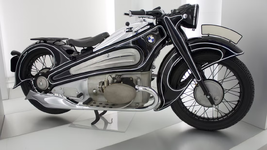
Take the 1934 R7. It was too art deco for the changing times so BMW opted for the also technically more advanced R5 which the R18 is said to homage but look at the R7 exhausts. No discussion about the R18 muffler heritage is there ?!
The retro thing of the extended reverse gear lever is also illustrated.


image_2025-09-09_215525311.png
 
The homage seat wasn't a straight up retro play for me. I needed a seat that opened up my hip and knee angle a bit whilst not ruining the bikes aesthetics. Not knowing how much I might need to come up and then back/forward it was the only seat type that let me make 20-50mm adjustments to see what would work.
Looked at your thread about the seat several time btw.
Yesterday decided to buy the experience but sofar have been thwarted in the attempts so 🤞
 
What is the "AFR" you referred to? I am not familiar with that. Keep up the great posts! Especially the 1934 R7 pic. Very cool.
 
What is the "AFR" you referred to? I am not familiar with that. Keep up the great posts! Especially the 1934 R7 pic. Very cool.
Air to fuel ratio..... in modern times it tends towards lean for exhaust pollutuion compliance rules (euro 4, 5 etc)... also.... drive by noise regulations (so flat spots at certain rpm). So even though the R18 fueling adapts, it is targeting preset ratios that are somewhat non ideal performance wise.... but more friendly to frogs.
 
Let´s throw in another term; stoichiometric as thát is what @Noelpolar is referring to.

The air to fuel ratio (AFR) is the mass ratio of air to fuel in a combustion process, crucial for determining theoretically ideal combustion efficiency (and emissions). For gasoline engines, the stoichiometric AFR is about 14.7:1, meaning 14.7 parts of air for every part of gasoline. Mind that is in weíght!!
Also bear in mind that this is under ideal mixing, ignition timing etc.
Obviously it is a complicated process with many variables. Take the ambient air pressure, the humidity and temperature which add up to the RAD or relative air density.
Modern fuel injected engines have all sorts of sensors to give the CPU input about the process. For the intake it is p.e. the MAF (mass air flow) sensor. This combined with a temperature sensor calculates how much fuel can be metered. Very recently humidity is sometimes metered too.

Back to the AFR it is sort of obvious that because of the variables and the requirement of emissions and fuel economy the current priority is on complete combustion of all the gasoline. This in effect means that there will be excess air which in its turn means that under most operation conditions more fuel could be burned. For max power therefore the mixture can be richer.

And there you have it. The difference between the OEM programs and after market programs; the different priorities; max. efficiency vs max power.

A caveat should be made concerning the catalist. The O2 sensor (aka lambda sensor) is part of a closed feed back loop telling the CPU about the result of the combustion. In effect the sensor in the exhaust register the combustion efficiency. This closed loop overrules all which means that the CPU will to a large extend correct any after market program when that goes outside of the parameters. Too far out of bounds will cause the CEL (check engine light) to be switched on.

Back to the R18 we should relaise that it is a naturally aspirated engine. This means that the air is flowing through because of pressure difference between the ambient air pressure and that in the inlet tract. ÁNY resistance in the inlet tract = pressure drop = less air = less fuel = less power. It is crucial to be aware that in an n.a. engine the ambient air pressure is the feed of it all. However much an engine sucks, there is only 1 bar on the outside. Period.
Now the real life crux: Noise regulations. The inlet needs incorporate mufflers. Those consist of restrictions to the sound waves, anavoidably also air flow.
The R18 having large capacity displacement at relatively low revs means that the pressure drops have spikes and the air mass has limited kinetic energy.
Dropping in a ´sports´air filter is only part of the story of the intake. The muffling is mostly in the trackt befóre the filter.
Ah.... take off the filter box lid! Again only marginal gains; the real restriction is in the access from the outside world; the openings in the housing. The main entry are the ´gills´ at the front but BMW have provided a sort of compensator with the cable entry at the top and by drilling holes in the filter lid.

Phew and all that following the question what is AFR.

 
Let´s throw in another term; stoichiometric as thát is what @Noelpolar is referring to.

The air to fuel ratio (AFR) is the mass ratio of air to fuel in a combustion process, crucial for determining theoretically ideal combustion efficiency (and emissions). For gasoline engines, the stoichiometric AFR is about 14.7:1, meaning 14.7 parts of air for every part of gasoline. Mind that is in weíght!!
Also bear in mind that this is under ideal mixing, ignition timing etc.
Obviously it is a complicated process with many variables. Take the ambient air pressure, the humidity and temperature which add up to the RAD or relative air density.
Modern fuel injected engines have all sorts of sensors to give the CPU input about the process. For the intake it is p.e. the MAF (mass air flow) sensor. This combined with a temperature sensor calculates how much fuel can be metered. Very recently humidity is sometimes metered too.

Back to the AFR it is sort of obvious that because of the variables and the requirement of emissions and fuel economy the current priority is on complete combustion of all the gasoline. This in effect means that there will be excess air which in its turn means that under most operation conditions more fuel could be burned. For max power therefore the mixture can be richer.

And there you have it. The difference between the OEM programs and after market programs; the different priorities; max. efficiency vs max power.

A caveat should be made concerning the catalist. The O2 sensor (aka lambda sensor) is part of a closed feed back loop telling the CPU about the result of the combustion. In effect the sensor in the exhaust register the combustion efficiency. This closed loop overrules all which means that the CPU will to a large extend correct any after market program when that goes outside of the parameters. Too far out of bounds will cause the CEL (check engine light) to be switched on.

Back to the R18 we should relaise that it is a naturally aspirated engine. This means that the air is flowing through because of pressure difference between the ambient air pressure and that in the inlet tract. ÁNY resistance in the inlet tract = pressure drop = less air = less fuel = less power. It is crucial to be aware that in an n.a. engine the ambient air pressure is the feed of it all. However much an engine sucks, there is only 1 bar on the outside. Period.
Now the real life crux: Noise regulations. The inlet needs incorporate mufflers. Those consist of restrictions to the sound waves, anavoidably also air flow.
The R18 having large capacity displacement at relatively low revs means that the pressure drops have spikes and the air mass has limited kinetic energy.
Dropping in a ´sports´air filter is only part of the story of the intake. The muffling is mostly in the trackt befóre the filter.
Ah.... take off the filter box lid! Again only marginal gains; the real restriction is in the access from the outside world; the openings in the housing. The main entry are the ´gills´ at the front but BMW have provided a sort of compensator with the cable entry at the top and by drilling holes in the filter lid.

Phew and all that following the question what is AFR.
Are there performance o2 sensors for the R18?
 
Are there performance o2 sensors for the R18?
No. The only ´performance´ thing with the lambda sensors would be spacers taking the sensor outs of the gas flow so the CEL does not light up if the cats are removed.
Best forget about that though and avoid the rabbit holes.
 
Last edited:
Fwiw.... and probally not much..... when we ran a BT Moto (Brentune) group buy earlier in the year I started one over in the R9t forum to get combined buy numbers up over 20 for a bigger discount. In the thread the Bren tune guy outlined certain aspects of their tune for various euro 3/4/5 models. The euro 5 (I have one) was the first of the r9ts to have wideband o2 sensors.... like the R18. Anyway this is a copy of his words regarding the e5 r9t.... the part I found interesting is "doesn't work like this from the factory".

"One of the first to use the new wideband sensor logic like the 2020+ S1000RR and can be set to full time closed loop (O2 sensors add / trim fuel as needed) making the bike target and correct (auto-tune) for a specific lambda set by the tune, once the logic is switched on in the ECU with tuning (doesn't work like this from the factory). Meaning airflow changes for the filter/exhaust can be aitomated. They also use knock sensing to pick the best ignition map meaning more power or less power pending fuel octane. In addition, they also have throttle limiting and gear limiting on certain software versions (USA and EU). The loud start feature can cause issues with stalling on the exhaust on factory programming. This bike also has an annoying engine brake option that disturbs the rider that is mapped out. Because the fueling model is better and ignition as well these aren't "huge" gain-on-dyno bikes like the older ones but the driveability is much improved."
 
Thank you for that insight info.

The loud start and engine braking on the T18 are functions from the exhaust flaps.
The loud start is not a feature but consequential of not throttling the exhaust during starting. This is logical. Any throttling would result in difficult to ignite gasses in the combustion chamber. If the flaps are closed too soon, this wil stall the engine. Any manipulation of the twist grip will likely result iin this.
The engine braking is like in large trucks. Close the exhaust and the pistons have resistance to get the gas out = engine braking. With the flaps removed, this changes fundamentally by less restrictive mufflers / cat removal. With a more open exhaust engine braking will be stronger then with stock exhaust (and flaps removed).

As I wrote, the power gains with this engine are just about exclusively found on the intake and that is limited to reducing resistance because it cannot be tuned for charging by waves or kinetic energy of the gas flow.

Because the manufacturers need to play it safe with their mapping, I have no doubt that changing the factory mapping to parameters sailing closer to the legal requirements gives results albeit not in max output. I.e. not any fáster but better feel.
The ample margins in stock parameters and the wide band O2 sensors adjust fueling for opening up the intake and removing the exhaust flaps .
Yes, there is room for optimising but at the cost of less tolerance for odd/extreme circumstances and potential loss of the additional programming after p.e. a battery fail. For the R18 I would personally not bother with remapping but yes remapping does have marginal gains.
Last observation I would like to make is that the remapping is best done after the first 6k service.
 
Phew the homage seat set is under way.
BMW-Europe ships from France thus no customs so should not take too long to get up here into the mountains.

Looking forward to figuring out how to fit it.
With the experts here should pan out ok ;)
 
Last edited:
Thank you for that insight info.

The loud start and engine braking on the T18 are functions from the exhaust flaps.

The cold start up fast idle is on a completely differerent level with the E5 r9t's.... truely awful....

Congrats on the seat sourcing!
 
The cold start up fast idle is on a completely differerent level with the E5 r9t's.... truely awful....

´cold´start is a bit different here anyway ;)


Congrats on the seat sourcing!

Thanks. Not as :eek: as 50€ for the 100 year gift box but nnder 500€ shipped seems good vfm.
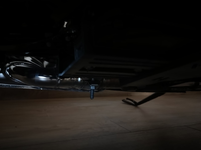
 
A niggle: I generally do not like too long bolts. I understand that a bit of extra length facilitates assembly but apart from being excess weight it looks bad.
Two things the R18 can do without.
Ok the subject(s) of my ire:

image_2025-09-14_194215971.png


These muffler clamp bolt are só long they stick out from under the belly like two rubber vent tubes.
 
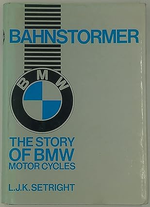
Just bought a .., euhmmm different read about BMW history: Bahnstormer by L.J.K.Setright.
Whether his quite unique style of writing rocks yoúr boat or not, Setright rocked thé boats. He wrote hónest reviews, regardless of advertising revenues so was not a sought after writer by the motoring magazines. He also always had his facts straight resulting in the same 🫣
Looking forward to it.


1757941294737.png
 
Last edited:
Back
Top